
ARIZONA PEDESTRIAN AND BICYCLE ACCIDENTS ATTORNEYS
Pedestrian and Bicycle Accident Lawyer in Phoenix and Across Arizona
Phoenix is one of the deadliest U.S. cities for pedestrians and cyclists. We fight insurer blame-shifting and recover full compensation.
- Available 24/7
- Hablamos Español
- No Fee Unless We Win
- Free Consultation

WHAT WE HANDLE
Representing Phoenix Pedestrian and Bicycle Accidents Victims for 25+ Years
Arizona is one of the most dangerous states in the nation for pedestrians and cyclists. Phoenix consistently ranks among the worst U.S. cities for pedestrian fatalities. When a 4,000-pound vehicle strikes a person walking or biking, the injuries are catastrophic — and the legal complexities are significant.
Drivers and their insurance companies often blame pedestrians and cyclists, claiming they were jaywalking or riding unsafely. Saguaro Injury Law fights these tactics and recovers full compensation for pedestrians and cyclists across the Phoenix metro.
We know Arizona's right-of-way laws, the 3-foot passing rule, and the realities of crosswalk and intersection design — and we use that knowledge to win.
ARIZONA LAW
Your Arizona Pedestrian/Bicycle Accident Legal Guide
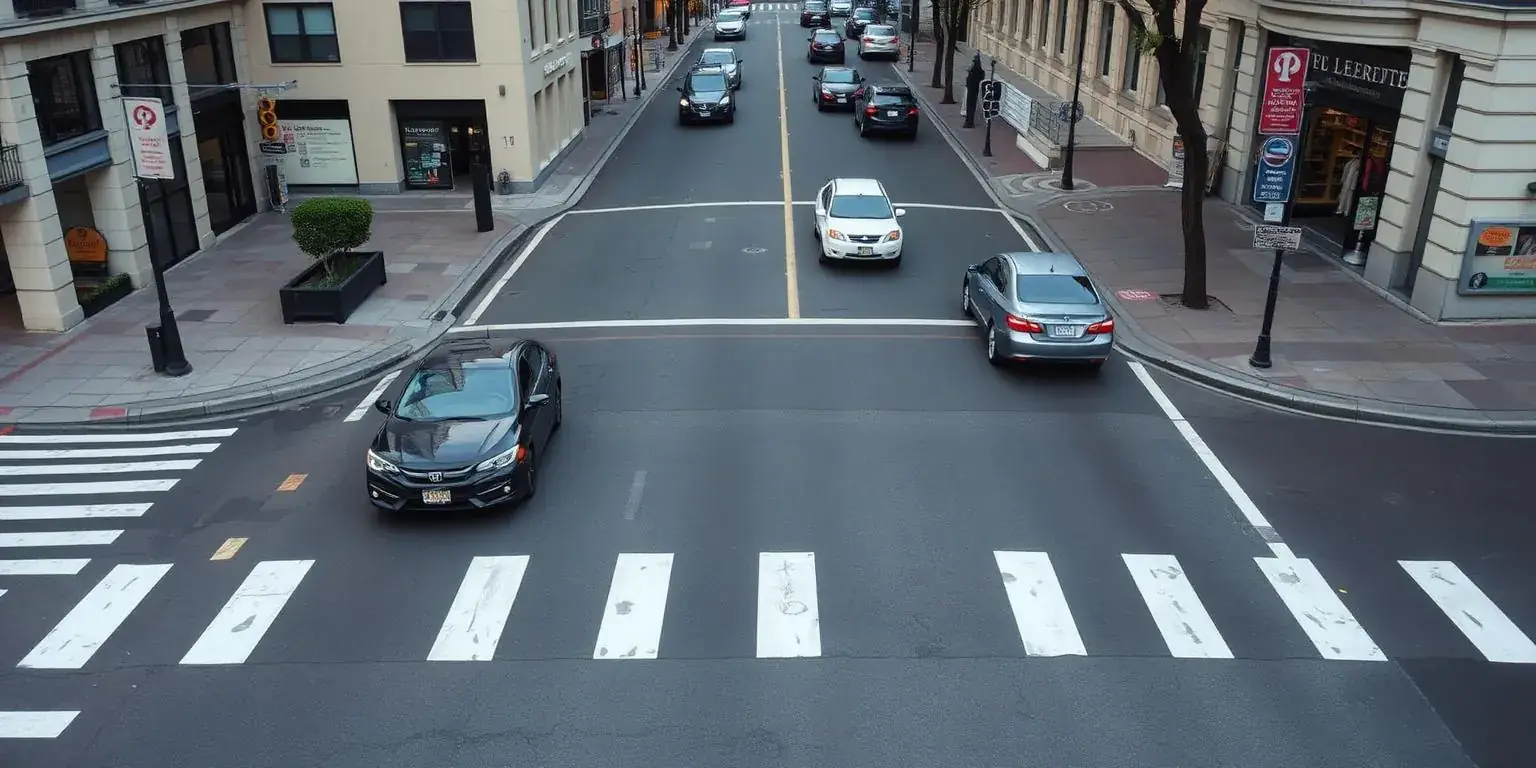
Crosswalk Right-of-Way Under A.R.S. § 28-792
A.R.S. § 28-792 is the core pedestrian right-of-way statute in Arizona. When traffic control signals are not in place or not in operation, the driver of a vehicle must yield the right-of-way, slowing down or stopping if necessary, to a pedestrian crossing the roadway within a crosswalk when the pedestrian is on the half of the roadway on which the vehicle is traveling, or when the pedestrian is approaching so closely from the opposite half as to be in danger. The statute also prohibits a pedestrian from suddenly leaving a curb or other place of safety and walking or running into the path of a vehicle that is so close it is an immediate hazard.
Two related rules matter as much in practice:
- A.R.S. § 28-793 requires a pedestrian crossing a roadway at a point other than within a marked crosswalk or an unmarked crosswalk at an intersection to yield the right-of-way to vehicles on the roadway.
- A.R.S. § 28-794 imposes an independent duty on every driver to exercise due care to avoid colliding with a pedestrian, to give warning by sounding the horn when necessary, and to exercise proper precaution on observing a child or an obviously confused, incapacitated, or intoxicated person.
Section 28-794 is the reason a pedestrian outside a crosswalk is not automatically without a claim. Even where the pedestrian had a duty to yield, the driver's separate duty of due care continues to apply, and a driver who was speeding, distracted, or failed to keep a proper lookout can carry a substantial share of the fault.
Arizona also protects pedestrians using a white cane or a service animal under A.R.S. § 28-796, and drivers must yield to a pedestrian on a sidewalk when crossing it to enter or exit a driveway or alley.
Arizona's Three-Foot Passing Law for Bicycles
A.R.S. § 28-735 requires a driver overtaking a bicycle proceeding in the same direction to exercise due care by leaving a safe distance of not less than three feet between the vehicle and the bicycle until the vehicle has safely passed. The statute carries enhanced civil penalties where a violation results in a collision causing serious physical injury or death to the cyclist.
The three-foot rule sits inside a broader framework:
- A.R.S. § 28-812 gives a person riding a bicycle on a roadway the rights and duties applicable to the driver of a vehicle. Cyclists must obey traffic control devices; drivers must treat them as traffic.
- A.R.S. § 28-815 governs lane position, generally requiring a cyclist on a roadway at less than the normal speed of traffic to ride as close as practicable to the right-hand curb, with express exceptions for passing, preparing to turn left, and avoiding unsafe conditions — including debris, parked cars and opening doors, and lanes too narrow to share safely. That exception list matters, because "he was riding too far left" is one of the most common defense arguments in these cases.
- A.R.S. § 28-817 requires a lamp on the front and a red reflector, and in some configurations a rear lamp, when riding at night. Non-compliance does not bar a claim, but it will be argued as comparative fault.
When a driver's passing distance is disputed, the physical evidence usually resolves it: mirror and side-panel contact points, paint transfer, the bicycle's damage pattern, and the final rest positions relative to the fog line. Dashcams and bicycle-mounted cameras have become decisive in these cases and should be preserved immediately.
Comparative Fault When the Pedestrian Was Outside the Crosswalk
This is the defense in the majority of Arizona pedestrian cases, and it is worth understanding precisely.
Under A.R.S. § 12-2505, Arizona applies pure comparative fault. The finder of fact assigns each party a percentage and reduces the award by the plaintiff's share. There is no fifty-percent cutoff. A pedestrian found seventy percent at fault for crossing mid-block still recovers thirty percent of the assessed damages. Only intentional conduct by the injured person bars recovery entirely.
So the question is never "was the pedestrian in the crosswalk." The question is how the total responsibility divides. The facts that move that allocation include the driver's speed relative to the limit and to conditions, phone use and other distraction, whether the driver had an unobstructed sightline and for how long, lighting and street design at the location, whether a marked crossing was reasonably available, and whether the driver ever braked before impact.
A.R.S. § 28-794's due care duty is central here, and so is the fact that a violation of a traffic statute by either party is evidence of negligence to be weighed — not an automatic assignment of all fault.
The same analysis applies to cyclists. Riding without a night lamp, riding outside a bike lane where an exception under § 28-815 applies, or rolling a stop sign are all arguments about percentage, not automatic defeat. Our comparative fault explainer walks through how these percentages actually get decided, and our post on bicycle and pedestrian accidents in Phoenix covers the local patterns.
Hit-and-Run and Uninsured Motorist Coverage
Pedestrians and cyclists are disproportionately the victims of hit-and-run drivers, and the coverage answer surprises most people: you generally do not need to have been in a car to use auto insurance.
A.R.S. § 20-259.01 requires Arizona insurers to offer uninsured motorist (UM) and underinsured motorist (UIM) coverage with every auto liability policy. UM coverage typically responds when the at-fault driver has no liability insurance and, subject to policy terms, when the driver cannot be identified — the hit-and-run or "phantom vehicle" scenario. UIM responds when the at-fault driver is insured but the limits are inadequate for the injuries. Because these coverages follow people rather than vehicles under most policy language, a pedestrian struck while walking or a cyclist struck while riding may have coverage under their own auto policy or, depending on the policy's definitions, under a resident relative's policy in the same household.
What protects that coverage:
- Report the collision to law enforcement promptly. A police report is close to essential in an unidentified-driver claim.
- Notify your own insurer quickly. UM/UIM claims carry contractual notice deadlines separate from the two-year statute of limitations.
- Preserve corroboration. Independent witnesses, nearby business and doorbell cameras, and debris or paint transfer from the fleeing vehicle all matter, because unidentified-motorist claims are commonly subject to corroboration requirements.
- Do not settle with the at-fault driver's liability insurer before addressing UIM. Most policies contain consent-to-settle provisions, and settling without the UIM carrier's written consent can forfeit the coverage.
Leaving the scene of an injury collision is a criminal offense in Arizona under A.R.S. § 28-661 and § 28-662, and a criminal case does not compensate you. The civil claim is separate and proceeds on its own timeline. Medical payments coverage, health insurance, and AHCCCS often carry treatment in the interim, and their reimbursement rights are resolved out of the recovery — see how medical liens work.
Injuries, Damages, and Arizona Deadlines
A person on foot or on a bicycle has no structure, no restraint system, and no crumple zone. The injury profile in these collisions skews toward traumatic brain injury, skull and facial fractures, spinal injury, pelvic and lower-extremity fractures from bumper-height impact, internal organ injury, and severe degloving and road rash — often with a secondary impact against the windshield or the pavement.
Recoverable damages in Arizona include past and future medical expenses, lost income and loss of future earning capacity, pain and suffering, disfigurement, permanent impairment and disability, out-of-pocket costs including assistive devices and home modification, and loss of consortium in serious cases. Where a pedestrian or cyclist is killed, the claim proceeds under Arizona's wrongful death statutes, A.R.S. § 12-611 through § 12-613 — see wrongful death. Arizona imposes no statutory cap on compensatory damages; Article 2, Section 31 of the Arizona Constitution bars laws limiting damages for death or injury.
Deadlines to calendar immediately:
- Two years from the date of injury under A.R.S. § 12-542; two years from the date of death for wrongful death.
- A public entity or employee — a city bus, a municipal vehicle, a dangerous crossing or signal-timing defect, a transit platform — requires a written notice of claim within 180 days under A.R.S. § 12-821.01 and suit within one year under A.R.S. § 12-821.
- A.R.S. § 12-502 tolls the period for a minor or a person of unsound mind, which matters often here because so many pedestrian claimants are children.
- UM/UIM contractual notice and consent-to-settle requirements run on the policy's schedule, not the statute's.
Evidence ages faster than any of those deadlines. Signal timing data, transit and municipal camera footage, nearby business video, and roadway debris all disappear within weeks. Related reading: the first 24 hours after a crash, the most dangerous intersections in Phoenix, and the Arizona statute of limitations. Related pages: car accidents and motorcycle accidents.
This page provides general information about Arizona law. It is not legal advice and does not create an attorney-client relationship. Statutes and their application change, and every case turns on its own facts. Speak with an attorney about your specific situation.
PROTECT YOUR CASE
What to Do After a Pedestrian/Bicycle Accident
- 1
Get to safety
- 2
Call 911
- 3
Get medical attention immediately
- 4
Document the scene if possible
- 5
Get the driver's information and witness contacts
- 6
Don't speak to the driver's insurance company
- 7
Preserve your bicycle and damaged gear
- 8
Contact a pedestrian/bicycle accident attorney
COMPENSATION AVAILABLE
What Compensation Can You Recover?
Medical Bills
Past and future medical care, surgeries, therapy, and prescriptions.
Lost Wages
Income lost during recovery and time off for medical appointments.
Pain & Suffering
Physical pain and discomfort caused by your injuries.
Emotional Distress
Anxiety, depression, PTSD, and other psychological harm.
Property Damage
Vehicle repair or replacement and damaged personal items.
Loss of Earning Capacity
Reduced ability to earn income going forward.
Loss of Consortium
Loss of companionship and support for spouses and family.
Disability / Disfigurement
Long-term limitations and visible scarring or disability.
Case values depend on specific circumstances. Past results do not guarantee future outcomes.
COMMON CAUSES
Common Causes
Distracted drivers (especially in crosswalks)
Failure to yield at crosswalks
Drivers turning right on red without looking
Drunk or impaired drivers
Speeding through neighborhoods
Drivers passing too closely to cyclists
Dooring incidents
Hit-and-run incidents
Inadequate lighting
Road hazards forcing cyclists into traffic
WHY CHOOSE SAGUARO
Premier Pedestrian/Bicycle Accident Representation in Arizona
Local
Offices spanning the Phoenix metro, from Goodyear in the West Valley to Mesa in the East.
Spanish-Speaking
Spanish-speaking staff, every step of the way. Your case is handled in the language you're most comfortable with.
Experienced
Decades of combined experience handling Arizona personal injury cases. We've recovered millions for clients across the state.
No Fee Promise
You pay nothing unless we recover compensation for you. Free consultations. Case-related expenses advanced on your behalf.
RECENT RECOVERIES
Recent Pedestrian/Bicycle Accident Settlements
Pedestrian struck in parking lot
Tempe, AZ · 2017Cyclist struck by turning vehicle
Phoenix, AZ · 2018Pedestrian struck in crosswalk
Scottsdale, AZ · 2019Past results do not guarantee future outcomes.
View All Case ResultsFREQUENTLY ASKED QUESTIONS
Pedestrian/Bicycle Accident FAQs in Arizona
- You can still recover under comparative fault. Your share of fault reduces — but does not eliminate — recovery.
DON'T WAIT
Arizona's Statute of Limitations is 2 Years
Miss the deadline and your case is gone — no matter how strong it was. Don't wait. Call now for a free consultation.
(602) 217-0000Available 24/7 — free consultations in English and Spanish
Get Your Free Pedestrian/Bicycle Accident Case Review
100% Confidential · Free Consultation · Immediate Response
RELATED PRACTICE AREAS